

Hey there! As a supplier of Battery Storage Systems, I often get asked, "How do I calculate the capacity I need for a battery storage system?" Well, you've come to the right place. In this blog post, I'm going to break it down for you in a simple and easy - to - understand way.
First things first, let's understand why calculating the right battery capacity is so important. A battery storage system is like a safety net for your energy needs. It stores excess energy when it's available, like from solar panels during the day, and releases it when you need it, like at night or during a power outage. If you choose a battery with too little capacity, it won't be able to meet your energy demands. On the other hand, if you go for a battery with too much capacity, you'll end up spending more money than necessary.
Step 1: Determine Your Energy Consumption
The very first step in calculating the battery capacity you need is to figure out how much energy you consume on a daily basis. You can find this information on your electricity bills. Look for the kilowatt - hours (kWh) used over a certain period, usually a month. Divide this number by the number of days in that month to get your average daily energy consumption.
For example, if your electricity bill shows that you used 600 kWh in a 30 - day month, your average daily energy consumption is 600 / 30 = 20 kWh.
But it's not just about the average. You also need to consider your peak energy usage. Peak usage occurs when you're running multiple high - energy appliances at the same time, like your air conditioner, oven, and washing machine. Make a list of all your major appliances and their power ratings (usually in watts). Multiply the power rating by the number of hours each appliance is used per day to get the daily energy consumption for each appliance. Then, add them all up to get your peak daily energy consumption.
Step 2: Account for Energy Sources
If you have renewable energy sources like solar panels, this will affect the battery capacity you need. Solar panels generate electricity during the day, and you can store the excess energy in your battery for later use.
To calculate how much energy your solar panels can generate, you need to know their rated power output (in watts) and the average number of sunlight hours per day in your area. Multiply the rated power output by the number of sunlight hours to get the daily energy generation.

Let's say your solar panels have a rated power output of 5000 watts and you get an average of 5 sunlight hours per day. The daily energy generation is 5000 * 5 = 25000 watt - hours or 25 kWh.
If your average daily energy consumption is 20 kWh and your solar panels can generate 25 kWh per day, you might not need a very large battery. However, you still need to consider days with less sunlight or periods when your energy consumption is higher than normal.
Step 3: Consider the Depth of Discharge (DoD)
The depth of discharge is the percentage of the battery's capacity that you can actually use. Most batteries have a recommended DoD to ensure a long lifespan. For example, if a battery has a capacity of 10 kWh and a recommended DoD of 80%, you can only use 8 kWh (10 * 0.8) of its total capacity.
When calculating the battery capacity you need, you need to divide your required energy storage by the DoD. Let's say you need to store 10 kWh of energy and your battery has a DoD of 80%. The battery capacity you need is 10 / 0.8 = 12.5 kWh.
Step 4: Factor in System Efficiency
No battery storage system is 100% efficient. There are losses during the charging and discharging process. The efficiency of a battery storage system is usually between 80% and 90%.
To account for system efficiency, divide the required battery capacity (after considering DoD) by the system efficiency. If your required battery capacity is 12.5 kWh and your system efficiency is 85% (or 0.85), the actual battery capacity you need is 12.5 / 0.85 ≈ 14.7 kWh.
Examples of Our Battery Storage Systems
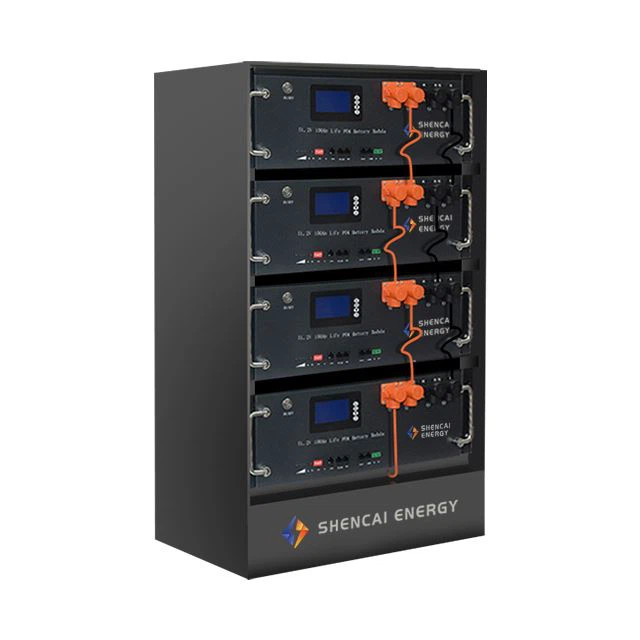
Now that you know how to calculate the battery capacity you need, let me introduce you to some of our great products. We have the 51.2V Assembled Home Energy Battery. This battery is designed for home use and offers a reliable and efficient energy storage solution. It has a high - quality build and is suitable for various energy consumption levels.
Another great option is our 5kwh Stacked Energy Storage System For Home. This system is modular, which means you can stack multiple units together to increase the total capacity according to your needs. It's a flexible and cost - effective choice for homeowners looking to store energy.
Conclusion
Calculating the capacity you need for a battery storage system might seem complicated at first, but by following these steps, you can make an informed decision. Remember to consider your energy consumption, energy sources, depth of discharge, and system efficiency.
If you're still not sure about which battery storage system is right for you or how to calculate the capacity, don't worry! We're here to help. Our team of experts can assist you in choosing the perfect battery storage system for your specific requirements. Whether you're a homeowner looking to reduce your electricity bills or a business owner aiming for energy independence, we've got you covered.
Get in touch with us to start the procurement process and let's work together to find the best battery storage solution for you.
References
- "Battery Energy Storage Systems: Design and Implementation" - A comprehensive guide on battery storage systems.
- "Renewable Energy Handbook" - Covers various aspects of renewable energy, including solar power and battery storage.