

As a supplier of LiFePO4 storage batteries, I am often asked about the chemical composition of these remarkable energy storage devices. In this blog post, I will delve into the intricate details of the chemical makeup of LiFePO4 storage batteries, explaining how each component contributes to their performance, safety, and longevity.
The Basics of LiFePO4 Storage Batteries
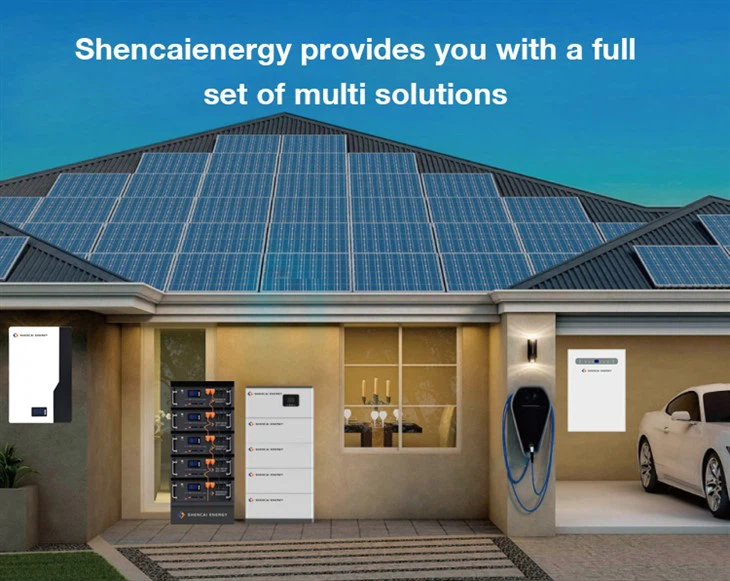
LiFePO4, or lithium iron phosphate, is a type of lithium-ion battery that has gained significant popularity in recent years due to its numerous advantages over other battery chemistries. These batteries are known for their high energy density, long cycle life, excellent thermal stability, and enhanced safety features. They are widely used in various applications, including Household Battery Storage, House Battery Storage Systems, and All-In-One Residential Energy Storage System.
Chemical Composition of LiFePO4 Storage Batteries
A LiFePO4 storage battery consists of several key components, each playing a crucial role in its operation. The main components include the cathode, anode, electrolyte, separator, and current collectors.
Cathode
The cathode is one of the most important components of a LiFePO4 battery. It is made of lithium iron phosphate (LiFePO4), which is a compound composed of lithium (Li), iron (Fe), phosphorus (P), and oxygen (O). The chemical formula LiFePO4 indicates that each unit of the compound contains one lithium atom, one iron atom, one phosphorus atom, and four oxygen atoms.
The structure of LiFePO4 is characterized by a three-dimensional framework of PO4 tetrahedra and FeO6 octahedra, with lithium ions occupying the interstitial sites. This unique structure provides a stable environment for lithium ions to move in and out of the cathode during the charging and discharging process.
During charging, lithium ions are extracted from the LiFePO4 cathode and migrate through the electrolyte to the anode. At the same time, electrons are released from the cathode and flow through the external circuit to the anode. The reaction at the cathode can be represented by the following equation:
LiFePO4 → FePO4 + Li+ + e-
During discharging, the reverse reaction occurs. Lithium ions are inserted back into the LiFePO4 cathode, and electrons flow from the anode to the cathode through the external circuit, generating an electric current. The reaction at the cathode during discharging is:
FePO4 + Li+ + e- → LiFePO4
Anode
The anode in a LiFePO4 battery is typically made of graphite, a form of carbon. Graphite has a layered structure that allows lithium ions to be intercalated (inserted) between the layers during charging and deintercalated (removed) during discharging.
During charging, lithium ions from the cathode migrate through the electrolyte and are inserted into the graphite anode. The reaction at the anode can be represented as:
xLi+ + xe- + C6 → LixC6

During discharging, the lithium ions are released from the graphite anode and migrate back to the cathode through the electrolyte. The reaction at the anode during discharging is:
LixC6 → xLi+ + xe- + C6
Electrolyte
The electrolyte is a conductive medium that allows lithium ions to move between the cathode and the anode. In a LiFePO4 battery, the electrolyte is usually a lithium salt dissolved in an organic solvent. Common lithium salts used in LiFePO4 batteries include lithium hexafluorophosphate (LiPF6), lithium perchlorate (LiClO4), and lithium tetrafluoroborate (LiBF4).
The organic solvents used in the electrolyte are typically a mixture of carbonates, such as ethylene carbonate (EC), dimethyl carbonate (DMC), and ethyl methyl carbonate (EMC). These solvents have good solubility for lithium salts and provide a high ionic conductivity at room temperature.
The electrolyte plays a crucial role in the performance and safety of the battery. It must have a high ionic conductivity to allow for efficient lithium ion transport, as well as good chemical stability to prevent side reactions with the electrodes and other components of the battery.
Separator
The separator is a porous membrane that is placed between the cathode and the anode to prevent short circuits while allowing the passage of lithium ions. It is typically made of a polymer material, such as polyethylene (PE) or polypropylene (PP).
The separator has a high porosity to allow lithium ions to pass through easily, but it must also have a low electrical conductivity to prevent the flow of electrons between the cathode and the anode. In addition, the separator must be chemically stable and resistant to the electrolyte and other components of the battery.
Current Collectors
Current collectors are used to collect and conduct the electrical current generated by the battery. The cathode current collector is usually made of aluminum foil, while the anode current collector is made of copper foil. These metals have high electrical conductivity and are chemically stable in the battery environment.
Advantages of LiFePO4 Storage Batteries Based on Their Chemical Composition
The chemical composition of LiFePO4 storage batteries gives them several advantages over other battery chemistries.
High Safety
One of the most significant advantages of LiFePO4 batteries is their high safety. The LiFePO4 cathode has a stable structure that is less prone to thermal runaway compared to other lithium-ion battery chemistries, such as lithium cobalt oxide (LiCoO2). Thermal runaway is a dangerous condition in which the battery overheats and can lead to fire or explosion.
The stable structure of LiFePO4 also makes it less likely to release oxygen at high temperatures, reducing the risk of combustion. In addition, the use of a non-toxic and non-flammable electrolyte further enhances the safety of LiFePO4 batteries.
Long Cycle Life
LiFePO4 batteries have a long cycle life, which means they can be charged and discharged many times without significant degradation. The stable structure of the LiFePO4 cathode and the graphite anode allows for repeated intercalation and deintercalation of lithium ions without causing significant structural changes.
Typically, LiFePO4 batteries can achieve more than 2000 charge-discharge cycles, making them suitable for applications where long-term reliability is required, such as energy storage systems for renewable energy sources.
High Energy Density
Although LiFePO4 batteries have a lower energy density compared to some other lithium-ion battery chemistries, they still offer a relatively high energy density. The energy density of a battery is a measure of the amount of energy it can store per unit volume or mass.
The high energy density of LiFePO4 batteries makes them suitable for applications where space and weight are limited, such as electric vehicles and portable electronic devices.
Environmental Friendliness
LiFePO4 batteries are more environmentally friendly compared to other battery chemistries. They do not contain heavy metals such as cobalt, nickel, or lead, which are toxic and can cause environmental pollution. In addition, the materials used in LiFePO4 batteries are more abundant and easier to recycle, reducing the environmental impact of battery production and disposal.
Conclusion
In conclusion, the chemical composition of LiFePO4 storage batteries is the key to their excellent performance, safety, and longevity. The use of lithium iron phosphate as the cathode material, graphite as the anode material, a lithium salt-based electrolyte, a polymer separator, and metal current collectors allows for efficient lithium ion transport and stable electrochemical reactions.
As a supplier of LiFePO4 storage batteries, we are committed to providing high-quality products that meet the needs of our customers. If you are interested in purchasing LiFePO4 storage batteries for your Household Battery Storage, House Battery Storage Systems, or All-In-One Residential Energy Storage System, please feel free to contact us for more information and to discuss your specific requirements. We look forward to working with you to find the best energy storage solution for your needs.
References
- Arumugam Manthiram, "Lithium Batteries: Science and Technology," Springer, 2017.
- John B. Goodenough and Yutaka Kim, "Chemistry of Materials," 22, 587-603 (2010).
- M. Armand and J.-M. Tarascon, "Nature," 451, 652-657 (2008).