

Hey there! As a supplier of rackmount storage batteries, I often get asked about thermal management. So, let's dig into what thermal management of a rackmount storage battery is all about.
First off, you might be wondering why thermal management is even important for these batteries. Well, rackmount storage batteries are used in a variety of settings, from data centers to industrial facilities. They store a significant amount of energy, and during charging and discharging processes, they generate heat. If this heat isn't properly managed, it can have some serious consequences.
One of the main issues with excessive heat in rackmount storage batteries is reduced battery life. High temperatures can accelerate the chemical reactions inside the battery, causing the electrodes to degrade faster. This means that the battery won't be able to hold as much charge over time, and you'll have to replace it sooner than you'd like. And let's face it, replacing batteries can be costly, both in terms of the actual battery and the labor involved.

Another problem is safety. Overheating batteries can pose a fire or explosion risk, especially if the temperature gets too high and the battery goes into thermal runaway. Thermal runaway is a situation where the heat generated by the battery causes a self - sustaining reaction that can lead to a catastrophic failure. So, keeping the temperature in check is crucial for the safety of the people and equipment around the battery.
So, how do we manage the heat in rackmount storage batteries? There are a few different methods, and the choice depends on the specific application and the design of the battery system.
Air Cooling
One of the most common methods is air cooling. This involves using fans to blow air over the batteries to remove the heat. Air cooling is relatively simple and cost - effective. You can install fans in the rack to create a flow of air that passes through the battery modules. The warm air is then exhausted out of the rack.
However, air cooling has its limitations. It's not as efficient as some other methods, especially in high - power applications or in environments with high ambient temperatures. The air may not be able to remove heat fast enough, and there can be uneven cooling across the battery modules. This can lead to some batteries getting hotter than others, which can further reduce the overall performance and lifespan of the battery system.
Liquid Cooling
Liquid cooling is another option. In this method, a coolant is circulated through a system of pipes or channels in contact with the batteries. The coolant absorbs the heat from the batteries and then transfers it to a heat exchanger, where it's dissipated. Liquid cooling is much more efficient than air cooling because liquids have a higher heat capacity than air. This means they can carry away more heat in a given volume.
There are two main types of liquid cooling: direct and indirect. In direct liquid cooling, the coolant comes into direct contact with the battery cells. This provides the most efficient heat transfer but requires careful design to prevent leaks and corrosion. Indirect liquid cooling, on the other hand, uses a heat exchanger to transfer the heat from the batteries to the coolant without direct contact. This is a safer option but may be slightly less efficient.
Phase - Change Materials (PCMs)
Phase - change materials are a relatively new technology in battery thermal management. PCMs are substances that can absorb and release a large amount of heat energy during a phase change, such as from solid to liquid or vice versa. They can be incorporated into the battery design or placed in the battery rack.
When the battery temperature rises, the PCM absorbs the heat and melts. This process helps to keep the battery temperature stable. When the battery cools down, the PCM solidifies again, releasing the stored heat. PCMs can provide passive thermal management, which means they don't require external power sources like fans or pumps. However, their effectiveness depends on the amount of PCM used and the specific phase - change properties of the material.
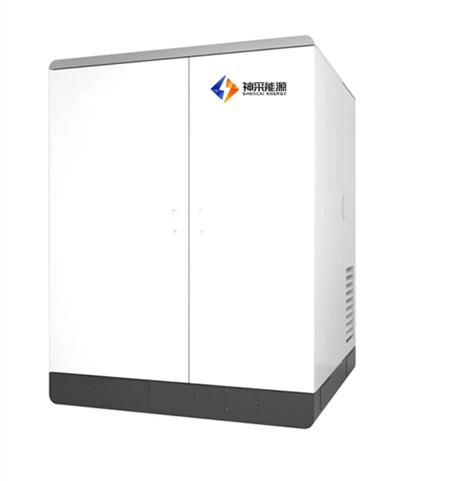
Now, let's talk about how thermal management fits into the bigger picture of energy storage solutions. We offer a range of products that are designed to work together to provide efficient and reliable energy storage. For example, our Container Energy Storage for Hospital is a complete solution that includes rackmount storage batteries with advanced thermal management systems. These containers are designed to provide backup power to hospitals, ensuring that critical medical equipment stays running even during power outages.
Our Container Energy Storage is another great option for industrial facilities. These containers can store large amounts of energy and are equipped with state - of - the - art thermal management to ensure optimal performance and safety.
And if you're looking for a large - scale energy storage solution, our Battery Storage System Station is the way to go. These stations are designed to store energy from renewable sources like solar and wind and can be used to stabilize the grid or provide power to large communities.
In conclusion, thermal management is a critical aspect of rackmount storage batteries. It helps to ensure the longevity, performance, and safety of the batteries. Whether you're using air cooling, liquid cooling, or phase - change materials, the goal is to keep the battery temperature within a safe and optimal range.
If you're in the market for rackmount storage batteries or energy storage solutions, we'd love to hear from you. We can provide you with detailed information about our products and help you choose the right thermal management system for your needs. Contact us today to start the conversation about your energy storage requirements.
References
- "Battery Thermal Management Systems: Design and Control" by X. Zhang and Y. Li
- "Thermal Management of Lithium - Ion Batteries for Electric Vehicles" by J. Wang et al.
- "Advanced Thermal Management Strategies for Energy Storage Systems" by S. Chen and D. Wu