

Hey there! As a supplier of Battery Energy Storage Systems (BESS), I've seen firsthand how these nifty devices can make a huge difference in reducing transmission and distribution losses. Let's dive into how that happens.
Understanding Transmission and Distribution Losses
First off, what are transmission and distribution losses? Well, when electricity is generated at power plants, it needs to travel through a complex network of power lines and transformers to reach our homes and businesses. Along the way, some of that electrical energy is lost as heat. These losses can be significant, sometimes accounting for up to 5 - 15% of the total electricity generated.
There are two main types of losses: technical and non - technical. Technical losses are due to the resistance of power lines, inefficient transformers, and other equipment. Non - technical losses, on the other hand, are often related to issues like theft and metering errors. In this blog, we'll mainly focus on how BESS can help with technical losses.
How BESS Helps in Reducing Losses
Peak Shaving
One of the most important ways a Battery Energy Storage System contributes to reducing losses is through peak shaving. During periods of high electricity demand, like hot summer afternoons when everyone has their air conditioners running, the power grid is under a lot of stress. Power plants have to ramp up production, and the electricity flowing through the transmission and distribution lines increases significantly.
Higher current means more losses because the power loss in a line is proportional to the square of the current (P = I²R, where P is power loss, I is current, and R is resistance). BESS can store electricity during off - peak hours when demand is low and prices are cheap. Then, during peak hours, the stored energy can be discharged into the grid. This reduces the amount of electricity that needs to be transmitted from power plants, thereby lowering the current in the lines and reducing losses.
For example, let's say a utility company has a peak demand of 100 MW during the afternoon. Without a BESS, the power plants need to generate and transmit this full 100 MW. But if a BESS with a capacity of 20 MW is installed, it can supply 20 MW during the peak period. So, the power plants only need to generate and transmit 80 MW. This reduction in current flowing through the lines directly reduces the transmission and distribution losses.
Voltage Regulation
Another key aspect is voltage regulation. Maintaining a stable voltage in the power grid is crucial. If the voltage is too high or too low, it can cause problems for electrical equipment and also increase losses. Transformers and other grid components are designed to operate within a specific voltage range.
BESS can help in regulating the voltage. When the voltage in a particular part of the grid is low, the BESS can inject reactive power to boost the voltage. Conversely, when the voltage is too high, the BESS can absorb reactive power. By keeping the voltage within the optimal range, the efficiency of the grid is improved, and losses are reduced.
Frequency Regulation
Frequency is another important parameter in the power grid. In a stable grid, the frequency should be maintained at a constant value (e.g., 50 Hz or 60 Hz depending on the region). Any imbalance between the generation and consumption of electricity can cause the frequency to deviate from this value.
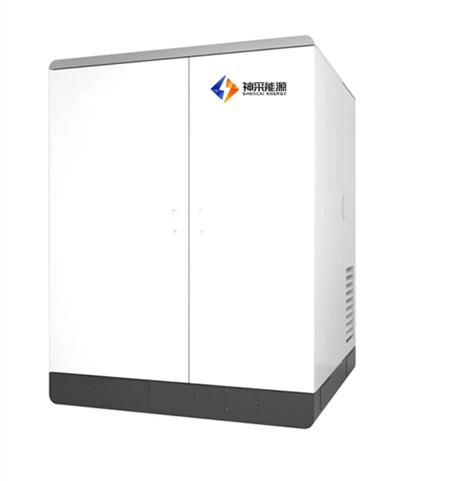

BESS can respond very quickly to changes in frequency. If the frequency drops, indicating that more power is being consumed than generated, the BESS can discharge energy into the grid to increase the power supply. If the frequency rises, the BESS can absorb energy. This fast - acting response helps in maintaining a stable frequency, which in turn improves the overall efficiency of the grid and reduces losses.
Real - World Applications
In real - world scenarios, BESS has already proven its worth. Many utilities around the world are installing BESS to improve the performance of their grids. For instance, in some remote areas where the power grid is weak and losses are high, BESS can be used as a distributed energy resource. It can store energy from local renewable sources like solar panels and wind turbines and supply it to the local grid when needed. This reduces the need to transmit electricity over long distances, which is often associated with high losses.
Our Products and Their Role
As a BESS supplier, we offer a range of products that can effectively contribute to reducing transmission and distribution losses. Our Energy Storage System LiFePO4 Container is a great option for large - scale energy storage. It uses LiFePO4 batteries, which are known for their long cycle life, high energy density, and safety. These containers can be easily integrated into the existing grid infrastructure and can be used for peak shaving, voltage regulation, and frequency regulation.
Our Battery Storage System Station is another powerful solution. It is designed to provide reliable energy storage for utility - scale applications. With advanced control systems, it can quickly respond to changes in grid conditions and optimize the use of stored energy to reduce losses.
And for more flexible and modular storage needs, our Rackmount Storage Battery is a great choice. It can be installed in existing electrical rooms or data centers and can be used to support local power systems, reducing the load on the main grid and minimizing losses.
Conclusion
In conclusion, a Battery Energy Storage System is a game - changer when it comes to reducing transmission and distribution losses. Through peak shaving, voltage regulation, and frequency regulation, BESS can significantly improve the efficiency of the power grid. As a supplier, we are committed to providing high - quality BESS products that can help utilities and businesses reduce their energy costs and environmental impact.
If you're interested in learning more about how our Battery Energy Storage Systems can benefit your grid or business, or if you're ready to start a procurement discussion, don't hesitate to reach out. We're here to help you make the most of this technology and contribute to a more efficient and sustainable energy future.
References
- "Electric Power Transmission System Engineering: Analysis and Design" by Turan Gonen
- "Energy Storage for Sustainable Microgrids" by Salman Farhangi