

The impedance spectrum of LiFePO4 storage batteries is a crucial aspect that reflects their electrochemical properties and performance characteristics. As a supplier of LiFePO4 storage batteries, understanding and leveraging this concept can significantly enhance our ability to provide high - quality products and better serve our customers.
Basics of Impedance in LiFePO4 Storage Batteries
Impedance in LiFePO4 storage batteries can be thought of as the opposition that the battery presents to the flow of alternating current (AC). It is a complex quantity, consisting of both resistive and reactive components. The resistive part represents the energy losses in the form of heat, while the reactive part is related to the energy storage and release in the electrochemical double - layer and the diffusion of ions within the battery.
The impedance spectrum is obtained by measuring the impedance of the battery over a wide range of frequencies. Typically, the frequency range can span from milli - Hertz to kilo - Hertz. At low frequencies, the impedance is mainly dominated by the diffusion of lithium ions in the electrodes and the electrolyte. As the frequency increases, the influence of the double - layer capacitance and the charge - transfer resistance becomes more prominent.
Components of the Impedance Spectrum
- Ohmic Resistance (R₀)
The ohmic resistance is the simplest component of the impedance spectrum. It includes the resistance of the electrolyte, the electrodes, and the current collectors. This resistance is frequency - independent and can be measured at very high frequencies (usually above 10 kHz). A low ohmic resistance is desirable as it indicates good electrical conductivity within the battery, which leads to less energy loss during charging and discharging. - Charge - Transfer Resistance (Rct)
The charge - transfer resistance represents the resistance associated with the electrochemical reactions occurring at the electrode - electrolyte interface. When lithium ions are inserted or extracted from the electrodes, a certain amount of energy is required to overcome the activation energy of these reactions. A high charge - transfer resistance implies slow reaction kinetics, which can result in reduced battery performance, especially at high - rate charging and discharging. - Warburg Impedance (Zw)
The Warburg impedance is related to the diffusion of lithium ions in the electrodes and the electrolyte. At low frequencies, the diffusion of lithium ions becomes the rate - limiting step. The Warburg impedance has a characteristic 45 - degree line in the Nyquist plot (a graphical representation of the impedance spectrum), which reflects the semi - infinite diffusion behavior of the ions.
Importance of the Impedance Spectrum for LiFePO4 Storage Batteries
- State of Health (SOH) Monitoring
The impedance spectrum can be used as an effective tool for monitoring the state of health of LiFePO4 storage batteries. As the battery ages, the internal resistance increases, and the charge - transfer resistance and Warburg impedance also change. By regularly measuring the impedance spectrum, we can detect early signs of battery degradation, such as electrode aging, electrolyte depletion, and the formation of solid - electrolyte interphase (SEI) layers. This allows us to predict the remaining useful life of the battery and take appropriate measures, such as replacement or maintenance. - Performance Evaluation
The impedance spectrum provides valuable information about the battery's performance under different operating conditions. For example, a battery with a low impedance at high frequencies is more suitable for high - power applications, as it can deliver or accept current quickly. On the other hand, a battery with a low Warburg impedance at low frequencies is better for applications that require long - term energy storage, such as Stacked Home Energy Storage Systems. - Battery Design and Optimization
Understanding the impedance spectrum can also guide the design and optimization of LiFePO4 storage batteries. By adjusting the electrode materials, electrolyte composition, and battery structure, we can reduce the internal resistance and improve the charge - transfer kinetics. For instance, using high - conductivity electrode materials or adding additives to the electrolyte can lower the ohmic resistance and charge - transfer resistance, respectively.
Measuring the Impedance Spectrum
There are several methods for measuring the impedance spectrum of LiFePO4 storage batteries. One of the most common methods is the electrochemical impedance spectroscopy (EIS). In EIS, a small AC signal is applied to the battery, and the response of the battery is measured over a wide range of frequencies. The impedance is then calculated from the ratio of the applied voltage to the measured current.
Another method is the galvanostatic intermittent titration technique (GITT), which measures the impedance by applying a series of constant - current pulses to the battery and analyzing the voltage response. Although GITT is more time - consuming than EIS, it can provide more detailed information about the diffusion processes within the battery.
Applications of LiFePO4 Storage Batteries Based on Impedance Characteristics
- Residential Energy Storage
For House Power Storage, LiFePO4 batteries with low impedance are preferred. These batteries can efficiently store energy from solar panels during the day and release it at night. The low ohmic resistance ensures that there is minimal energy loss during the charging and discharging processes, while the low charge - transfer resistance allows for fast response to changes in the power demand. - Solar Power Systems
In solar power systems, LiFePO4 batteries are often used to store the excess energy generated by solar panels. Batteries with a low Warburg impedance are ideal for this application, as they can handle the slow and continuous charging from solar panels over a long period. The Wholesale Rack Mounted 48V 100AH 200AH Lifepo4 Solar Battery Pack is designed to meet these requirements, providing reliable energy storage for solar power systems.
Conclusion
The impedance spectrum of LiFePO4 storage batteries is a powerful tool that can provide valuable insights into the battery's electrochemical properties, performance, and state of health. As a LiFePO4 storage battery supplier, we can use this knowledge to improve our product quality, optimize battery design, and better meet the needs of our customers.

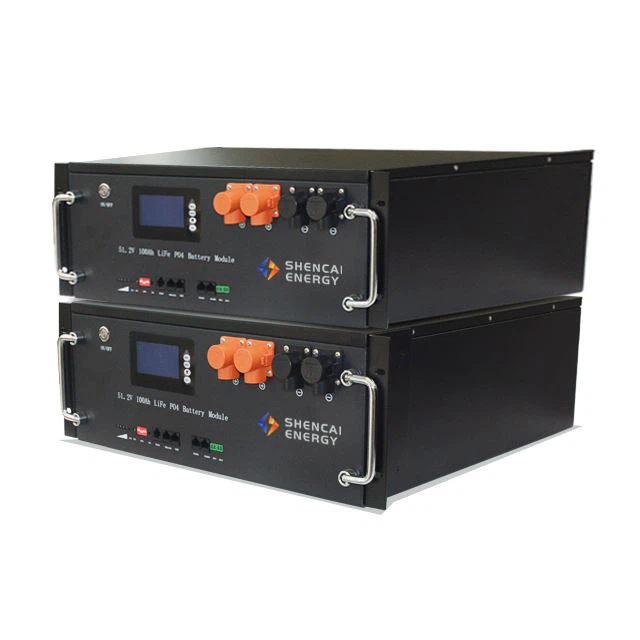
If you are interested in our LiFePO4 storage batteries or have any questions about their impedance characteristics and applications, we welcome you to contact us for procurement and further discussion. We are committed to providing you with the best products and services.
References
- Newman, J., & Thomas - Alyea, K. E. (2004). Electrochemical Systems. Wiley - Interscience.
- Bard, A. J., & Faulkner, L. R. (2001). Electrochemical Methods: Fundamentals and Applications. Wiley.
- Winter, M., & Brodd, R. J. (2004). What are batteries, fuel cells, and supercapacitors?. Chemical Reviews, 104(10), 4245 - 4269.